
GLP-1 Side Effects on Skin and Hair: A Calgary Patient’s Guide to Ozempic Face, Shedding, and Skin Laxity
Contact Us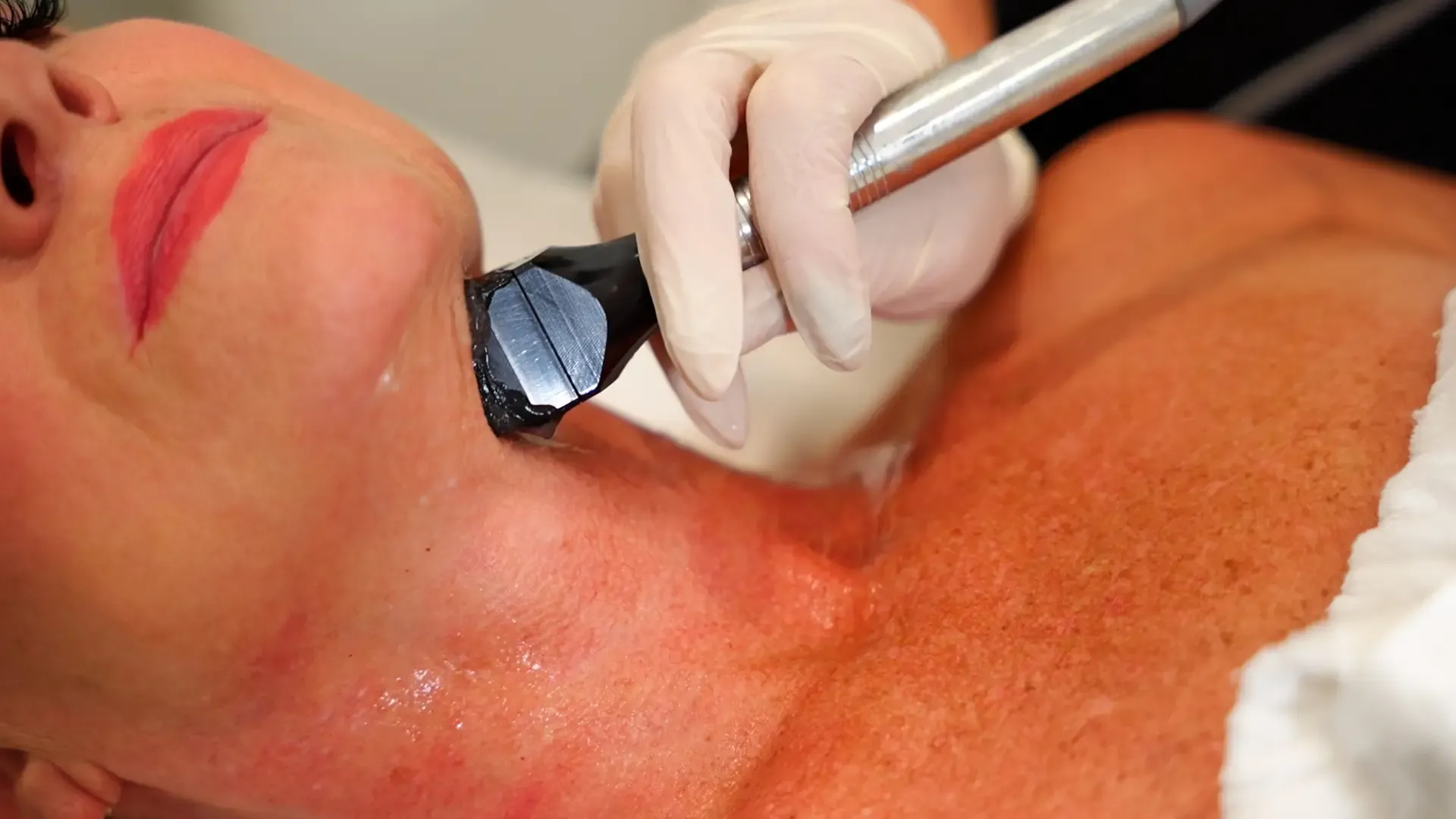
Table of Contents
If you’ve started a GLP-1 Ozempic, Wegovy, Mounjaro, Zepbound and the mirror is suddenly telling a different story than the scale, you’re not imagining it. Rapid weight loss outruns your skin. It outruns your hair follicles too. The cluster of side effects patients describe most often boils down to three things: a hollowed-out look in the midface (“Ozempic face”), loose skin on the neck, jawline, arms or abdomen, and a wave of shedding that usually shows up three to six months in. None of that is permanent, none of it has to derail your results, and most of it can be managed without surgery.
This guide walks through what’s actually happening biologically, and what the Skinfluence™ team in Calgary recommends to address each side effect.
Quick clarifier before we go further: Skinfluence™ does not prescribe GLP-1 medications. Talk to your physician or a Health Canada–licensed virtual care provider about prescription eligibility. What we do handle is the aesthetic side of the equation the part that shows up in the mirror.
A Quick Note on the Drugs Themselves
GLP-1 receptor agonists are injectable medications that mimic glucagon-like peptide-1, a hormone your gut already produces. They slow down how fast your stomach empties, dial up satiety, and improve insulin sensitivity. The result is meaningful, often dramatic weight loss. In the SURMOUNT-1 trial, the highest dose of tirzepatide produced an average weight loss of 22.5% of total body weight over 72 weeks the largest reduction ever recorded for an obesity drug approved by Health Canada. Six medications are currently approved here for chronic weight management: orlistat (Xenical), liraglutide (Saxenda), naltrexone-bupropion (Contrave), semaglutide (Wegovy), tirzepatide (Zepbound), and setmelanotide (Imcivree). And as of January 2026, Novo Nordisk’s regulatory exclusivity on semaglutide expired in Canada, with the first generic semaglutide launches scheduled for May 2026. That matters because it’s about to widen access nationally and the cohort of patients dealing with aesthetic side effects is going to grow with it. One thing worth saying clearly: the side effects we’re talking about aren’t caused by the drug acting on your skin or your hair directly. They’re driven by how fast and how much weight you lose. The drug is the trigger; the mechanism is metabolic.“Ozempic Face”: Why You Look Older After Losing Weight
Dermatologists started using the term “Ozempic face” a few years ago to describe a pattern they kept seeing in GLP-1 patients: gaunt midface, deeper folds, sunken temples, hollowed under-eyes. Your face isn’t aging overnight, but it can look like it is. Here’s why. The face holds discrete pockets of fat the deep medial cheek fat pad, the buccal fat, the temporal fat pad, the periorbital fat and those pockets are part of what gives your face its structure and youthful contour. When you lose weight rapidly, those pockets empty before the overlying skin has time to retract. What’s left looks like four things stacked together:- A flatter midface and loss of cheek projection.
- Sunken temples that suddenly show the bone underneath.
- Deeper nasolabial folds, marionette lines, and a slight downturn at the corners of the mouth.
- A more pronounced tear trough and hollowed under-eye.
What Actually Works for Ozempic Face
The fix is volumetric and biostimulatory, not surgical:- Hyaluronic acid dermal fillers restore lost volume in the cheek, temple, jawline, and tear trough. The Skinfluence Dermal Filler and Lip Filler treatments are designed for exactly this kind of structural replacement.
- SkinVive by JUVÉDERM is a microdroplet injectable hyaluronic acid that targets cheek smoothness and hydration. It’s a different tool than volumizing filler. Details on the SkinVive page.
- BOTOX® addresses the dynamic lines frown lines, crow’s feet, forehead — that get more pronounced once the supporting fat is gone. See BOTOX® Injections.
Body Skin Laxity: Same Mechanism, Different Real Estate
Everything that happens to your face happens to the rest of your body too. The dermis is essentially a collagen and elastin scaffold sitting over a layer of fat. That scaffold can adapt to volume changes — but slowly, over years. When you drop significant weight over a few months, the scaffold can’t keep up. You end up with crepey upper arms, a softened jawline, redundant skin on the abdomen, and that “bat wing” look across the triceps. There are three non-surgical modalities that move the needle here:- Energy-based skin tightening uses radiofrequency or ultrasound to heat the dermis and trigger new collagen production. Skinfluence offers Skin Tightening for face, neck, abdomen, and arms.
- Microneedling creates controlled micro-injury to the dermis, which kicks off the same collagen remodelling cascade. The full protocol is on the Microneedling page.
- Body contouring and sculpting is the right call if you’ve stalled out with residual fat pockets in specific areas that the weight loss didn’t fully address. See Body Contouring & Sculpting.
The Hair Loss Question
For a full breakdown of the GLP-1 hair shedding timeline, the bloodwork to request before it starts, and a treatment decision tree, read our deep-dive guide: Does Ozempic Cause Hair Loss? A Complete Guide to GLP-1 Hair Shedding.
This is the side effect that catches patients most off guard. You lose 30 pounds, you’re feeling great, and then around month three or four your shower drain starts looking alarming. What’s happening is called telogen effluvium. It’s a diffuse, non-scarring form of hair loss. Normally about 85–90% of your scalp follicles are in their active growth phase (anagen) at any given time, and the rest are resting (telogen). When the body experiences a significant metabolic or physiological stressor and rapid GLP-1 weight loss qualifies a larger-than-normal percentage of follicles get pushed prematurely into the resting phase. Two to three months later, all of those resting follicles release their hair shafts at roughly the same time. That’s the wave of shedding you’re noticing. The triggers in GLP-1 patients are well-known:- The caloric deficit itself, especially during dose titration.
- Not eating enough protein or hitting micronutrient targets iron, zinc, vitamin D, and B12 are the usual suspects when appetite drops sharply.
- The physiological stress of significant body composition change.